
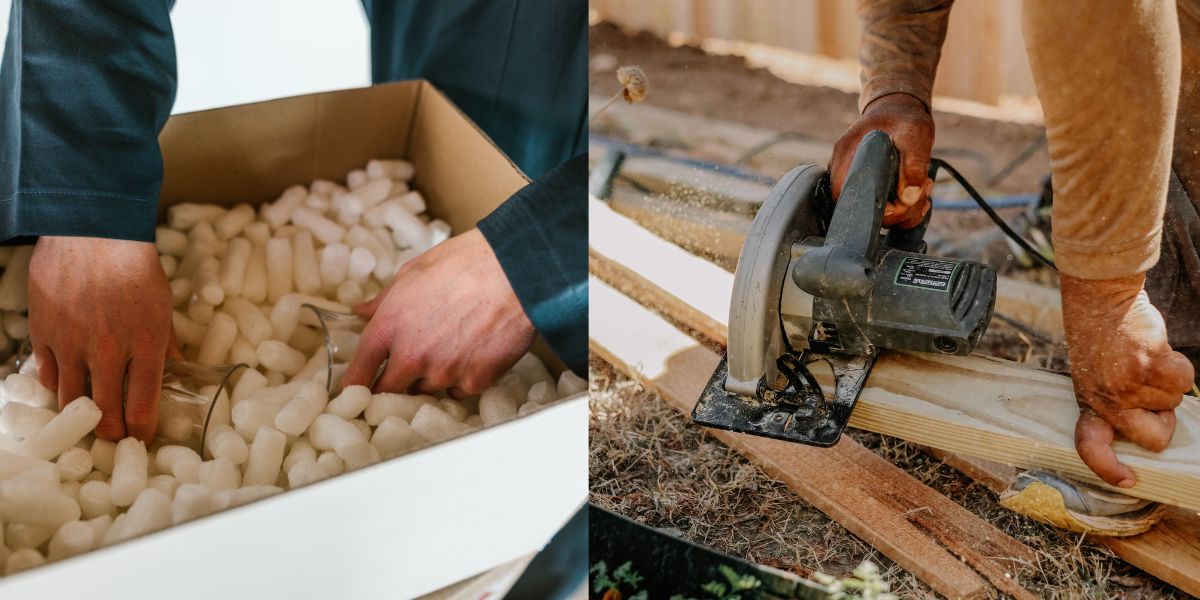
A material typically swept off workshop floors could soon play a key role in cutting plastic waste. Researchers have developed a new type of foam made primarily from sawdust, offering a renewable alternative to polystyrene, the petroleum-based material widely used in packaging and construction.
Polystyrene, often found in packing peanuts and protective inserts, is made from fossil fuels and is notoriously difficult to recycle. In response, scientists explored sawdust as a starting point for a more sustainable solution, combining it with plant-derived binders to create a lightweight foam with similar physical properties.
The team’s prototype materials were engineered by blending sawdust, either finely processed powder or raw mill waste, with cellulose-based binders and additives. The mixture was then moulded, frozen, and dried to form a foam structure. Depending on the binder used, the final product could be either stiff or flexible, with some samples showing comparable strength and impact resistance to traditional polystyrene.
One of the standout features is its ability to withstand moisture. Researchers found that adding a simple beeswax coating improved water resistance without compromising durability, meaning the material could hold up under real-world conditions such as humidity and transport exposure
Importantly, the innovation makes use of an abundant waste product. Sawdust is often discarded or burned, so repurposing it into a valuable material not only reduces reliance on fossil fuels but also gives new life to an underused resource. The approach highlights how industrial byproducts can be transformed into practical, environmentally friendly solutions.
While the early results are promising, researchers note that more testing is needed, particularly around long-term durability and large-scale production. Even so, the concept opens the door to greener packaging options and building materials that could significantly reduce plastic waste in the future.
With global concern around single-use plastics continuing to grow, innovations like this suggest a shift towards materials that not only perform well but also come from renewable and recyclable sources, helping industries rethink how everyday products are made.